




HMAP World Story
 HOME
HOME

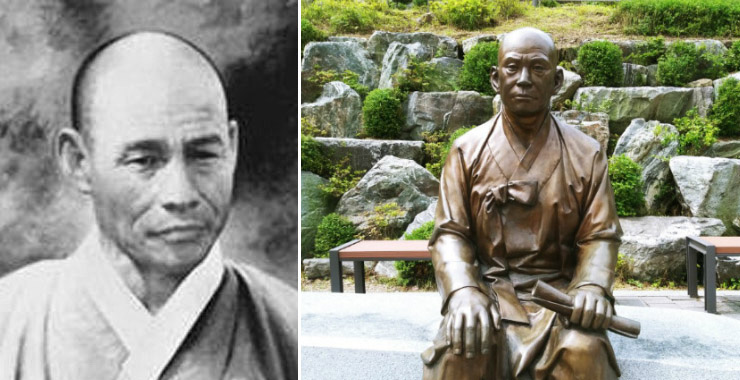
만해 한용운 (1879-1944)
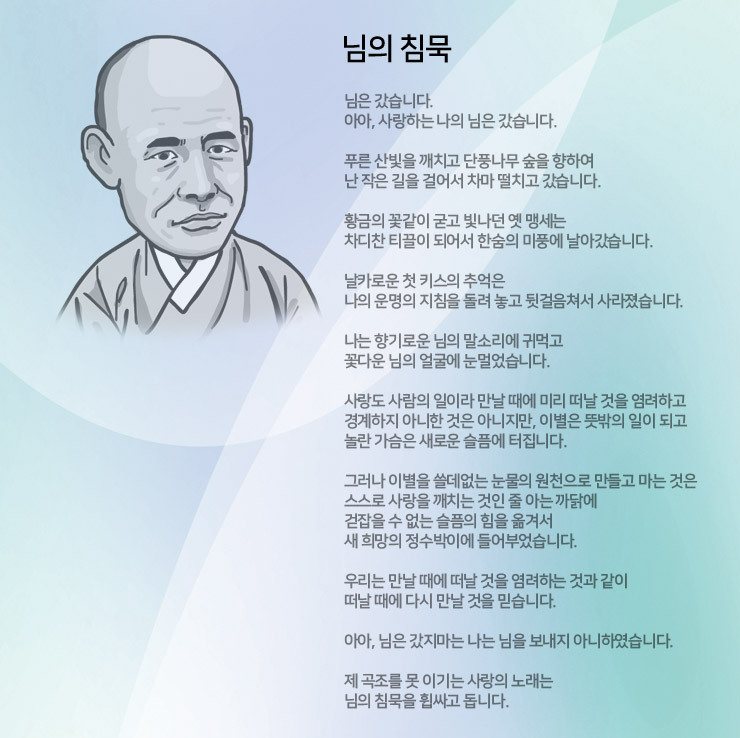
한용운은 1919년 3.1 운동 당시 민족대표 33인 중 한 명으로 독립운동을 주도한 혐의로 체포되어 옥고를 치렀다. 출옥 후에도 불교계·문화계에서 민족정신을 지키는 활동을 계속했다. 1926년 발표한 시집 《님의 침묵》은 한국 근대 문학의 최고 걸작 중 하나이다. 시집 전체를 관통하는 '님'이라는 주제는 표면적으로는 연인을 의미하지만 당시 일제강점기 상황에서 잃어버린 조국이나 잃어버린 진리를 상징하는 다의적인 존재로 해석된다. 그의 시는 깊은 슬픔과 고독 속에서도 다시 만날 것이라는 굳건한 희망과 의지를 담아내 암울했던 시대의 민족에게 큰 위안과 저항 정신을 불어넣었다.
Han Yongun (1879-1944)
Manhae was born in Yucheon in Chungcheongnam-do, Hongseong. During his childhood, he studied Chinese classics in Seodang, a popular elementary school during the Joseon Dynasty. Prior to being ordained, he was involved in resistance to Japanese influence in the country, which culminated in the Japanese occupation from 1905 to 1945.
[Learn more]Source : Wikipedia
ⓢ Simujang / 심우장
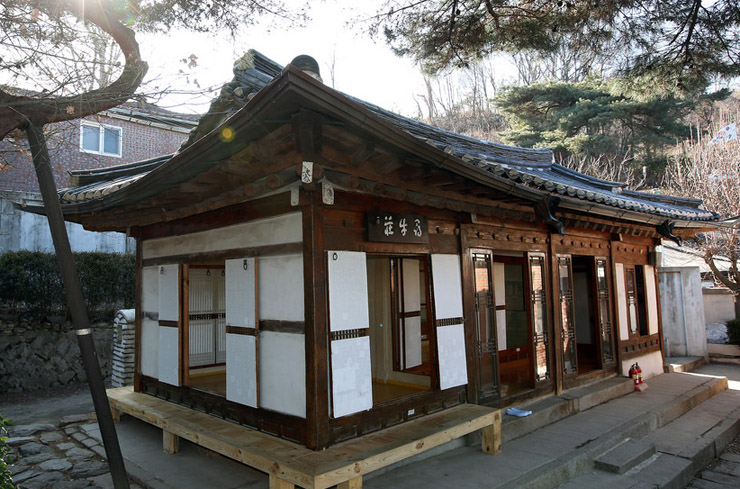
심우장
심우장은 한용운이 1933년부터 1944년까지 만년을 보내다가 세상을 떠난 곳이다. 대지의 동쪽으로 난 대문을 들어서면 왼편인 남쪽에 한옥으로 지은 심우장이 북향하여 서 있고, 대문 맞은편에는 벽돌조 단층으로 지은 관리인 주택이 심우장과 직교하며 동향으로 서 있다.
[자세히보기]출처 : Wikipedia
Simujang
Manhae Han Yong-un Simujang was the residence of the Korean Buddhist, poet and independence activist Han Yong-un. Han Yong-un's pen name was Manhae, and he named his residence Simujang. Simujang offers beautiful views of Seonguk-dong and visitors can see examples of Han's writings, research papers and trial records.
[Learn more]Source : Seoul Metropolitan

 0
0h·map story
my story


ZanzibarCEO Yun Jeong Choi
204, Dongsan-ro 14Gil 49, Seocho-Gu, Seoul, Republic of Korea
T. +82-10-6314-0823 Business License. 259-06-01622
E-Mail : humanmap@naver.com
※ Zanzibar, a stock company, is a broker of telecommunication sales
and is not a party to telecommunication sales.
Therefore, the company shall not be held liable for goods, transaction information or transactions.