


 HOME
HOME

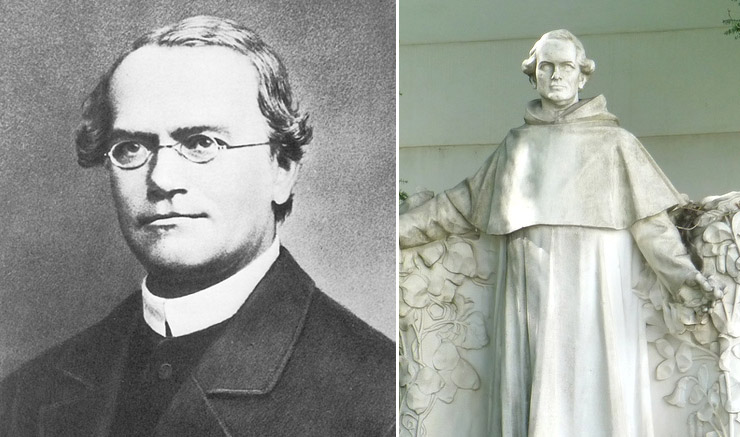
그레고어 멘델 (1822-1884, Austria)
그레고어 멘델은 유전의 법칙을 밝혀낸 과학자로 '유전학의 아버지'로 불린다. 그는 오스트리아 제국의 한 농가에서 태어났으며 수도원에 들어가 수도사로 생활하면서 연구를 이어갔다. 멘델은 완두를 이용한 실험을 통해 유전의 원리를 밝혀냈는데 서로 다른 특징을 가진 완두를 교배시키면서 자손에게 어떤 형질이 어떻게 전달되는지를 체계적으로 관찰하였다. 그 결과 어떤 형질은 일정한 규칙에 따라 다음 세대로 전달된다는 사실을 발견하였다. 이 연구를 통해 그는 우열의 법칙, 분리의 법칙, 독립의 법칙과 같은 유전 법칙을 정리하였다. 예를 들어, 부모에게서 받은 유전 요소는 서로 섞이는 것이 아니라 분리되어 자손에게 전달된다는 점을 밝혀냈다. 그러나 그의 연구는 당시에는 큰 주목을 받지 못했고, 사후에 다른 과학자들에 의해 재발견되면서 중요성이 인정되었다. 이후 멘델의 이론은 현대 유전학의 기초가 되었으며, 생물학 발전에 큰 영향을 주었다.
Gregor Mendel (1822-1884, Austria)
Gregor Johann Mendel was a scientist, meteorologist, mathematician, biologist, Augustinian friar and abbot of St. Thomas' Abbey in Brno, Margraviate of Moravia. Mendel was born in a German-speaking family in the Silesian part of the Austrian Empire (today's Czech Republic) and gained posthumous recognition as the founder of the modern science of genetics. Though farmers had known for millennia that crossbreeding of animals and plants could favor certain desirable traits, Mendel's pea plant experiments conducted between 1856 and 1863 established many of the rules of heredity, now referred to as the laws of Mendelian inheritance.
[Learn more]Source : Wikipedia

 0
0