

 HOME
HOME

모아이 석상
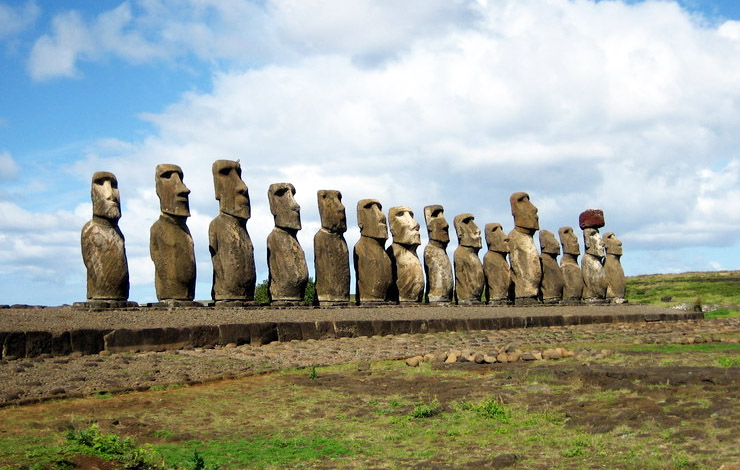
모아이 석상은 남태평양의 외딴 섬인 이스터 섬에 세워진 거대한 석조 인물상으로 라파누이(Rapa Nui) 문화의 대표적인 유산이다. 이 석상들은 13세기에서 16세기 사이에 제작된 것으로 추정되며, 섬의 여러 해안가에 줄지어 세워져 있다. 모아이 석상은 주로 화산 응회암으로 만들어졌으며, 평균 높이는 약 4미터, 무게는 수십 톤에 이른다. 길게 늘어진 얼굴과 두드러진 눈썹, 굳게 다문 입술이 특징이며, 일부 석상에는 붉은 화산석으로 만든 '푸카오(pukao)'라는 모자 모양 장식이 얹혀 있다. 이 석상들은 단순한 조형물이 아니라 조상 숭배 사상과 깊이 관련된 상징물로 당시 부족 사회에서는 권위 있는 조상의 영혼이 석상을 통해 마을을 보호하고 번영을 가져다준다고 믿었다. 모아이 대부분은 바다를 등지고 마을을 향해 서 있어, 공동체를 지켜보는 존재로 보인다. 모아이 석상은 거대한 크기와 제작·운반 방식의 신비로움으로 오랫동안 연구 대상이 되어 왔으며 이스터 섬은 유네스코 세계유산으로 지정되어 보호되고 있다.
Rapa Nui National Park
Rapa Nui, the indigenous name of Easter Island, bears witness to a unique cultural phenomenon. A society of Polynesian origin that settled there c. A.D. 300 established a powerful, imaginative and original tradition of monumental sculpture and architecture, free from any external influence. From the 10th to the 16th century this society built shrines and erected enormous stone figures known as moai , which created an unrivalled cultural landscape that continues to fascinate people throughout the world.
[Learn more]Source : UNESCO

 0
0