

 HOME
HOME

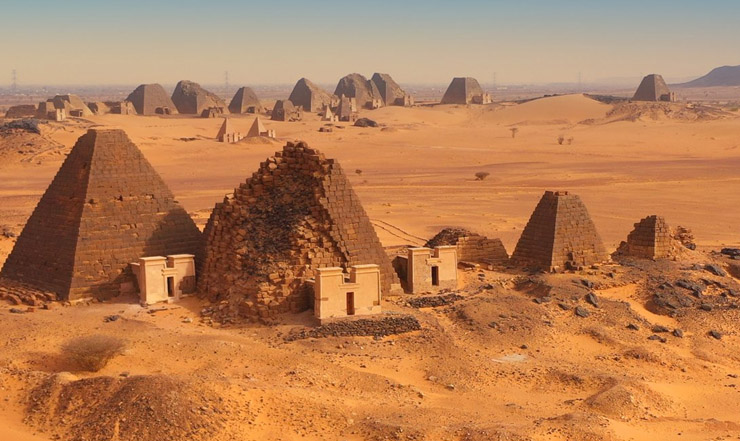
메로에 피라미드
메로에 피라미드 유적은 수단 북동부의 사막 지대에 위치한 고대 쿠시 왕국의 왕실 묘역으로, 기원전 3세기부터 서기 4세기까지 왕과 왕비, 귀족들의 무덤으로 사용된 유적이다. 이곳에는 200기 이상에 이르는 피라미드가 남아 있으며, 이집트 피라미드보다 규모는 작지만 경사가 급하고 뾰족한 형태를 띠는 것이 특징이다. 각 피라미드 앞에는 제사를 지내기 위한 예배당이 마련되어 있으며, 벽면에는 고대 쿠시 왕국의 종교와 왕권을 상징하는 부조와 비문이 새겨져 있다. 메로에는 당시 아프리카 내륙과 이집트, 지중해 세계를 연결하는 중요한 교역과 문화의 중심지로 번영했으며, 독자적인 문자와 예술, 건축 문화를 발전시켰다. 이러한 역사적·문화적 가치를 인정받아 메로에의 고고학 유적은 2011년 메로에의 고고학 유적이라는 이름으로 유네스코 세계문화유산에 등재되었으며, 아프리카 고대 문명을 대표하는 유적 가운데 하나로 평가받고 있다.
Archaeological Sites of the Island of Meroe
The Archaeological Sites of the Island of Meroe, a semi-desert landscape between the Nile and Atbara rivers, was the heartland of the Kingdom of Kush, a major power from the 8th century B.C. to the 4th century A.D. The property consists of the royal city of the Kushite kings at Meroe, near the River Nile, the nearby religious site of Naqa and Musawwarat es Sufra. It was the seat of the rulers who occupied Egypt for close to a century and features, among other vestiges, pyramids, temples and domestic buildings as well as major installations connected to water management. Their vast empire extended from the Mediterranean to the heart of Africa, and the property testifies to the exchange between the art, architectures, religions and languages of both regions.
[Learn more]Source : UNESCO

 0
0